Thursday, December 6, 2012

Quickest Way to Lower Scores


We all want to improve our golf scores but we are all very busy and don’t have a lot of time to practice so this month I want to let you know the fastest way to improve your scores. Practice your short game! Most of the shots we play are either chips, pitches, bunker shots or putts. The better you get at these types of shots, the lower your scores will become.

It is part of the game that many players don’t practice enough but it is much easier to find 30 minutes to drop into Burnley for some chipping and putting practice than it is to find time to hit balls at the driving range or play nine or eighteen holes on the course. We have a perfect little practice area for your use at Burnley and I don’t see nearly enough golfers using it to improve their short game.

You need to ensure you practice properly when you are practicing your short game. It is very easy to just drop all your practice balls in the one spot and hit the same chip, pitch, bunker shot or putt over and over again. This is not a very good way to improve your short game skills. When you are on the course, you only get one chance to hit each shot. If you mess it up, you have to go and play it from where it went. Hitting the same shot over and over in practice does not simulate on course play. You need to only take a few balls to the short game practice area and play lots of different shots and never play from the same place twice. This will make your practice more like playing on the course and improve your ability to play the shot under the pressure of being on the course.

A simple way to make your practice like your on course play is to build some pressure into your drills. Some simple ideas are to play closest to the hole with a friend (you can have a friendly wager), chip and putt out every shot until you get in the hole and keep score (you can then try and beat your score), try and chip 3 shots in a row closer then 3ft (punish yourself with sit ups if you fail) or complete a series of skill tests and try and improve your scores over time. You can find some great short game and putting skills tests under the newsletter archive tab of my website at www.brentdavisgolf.com. If you complete these tests and email me your scores (bdavis@pgamember.org.au) I will calculate your short game handicap so you can try and improve it.

Remember, the fastest way to lower scores is to have a good short game.

Until next time,

Brent

Thursday, July 5, 2012

Winter Golf Tips


Winter is well and truly here and if you are playing golf in Melbourne at the moment you are certainly facing the challenges of winter golf. Most courses at the moment are wet and the temperatures around the city have been chilly to say the least. These types of conditions pose certain types of challenges to golfers and golfers need to be able to adjust and adapt their golf game to ensure they still play good golf during the winter months. Below I will outline some basic strategies that you can use to help with the challenges of playing golf in the colder months.

         Staying warm and dry: This is arguably the most important piece of the winter golf puzzle. If you are not comfortable when you are playing the game you are going to struggle to score well. Making sure you are dry and warm and still able to swing freely is extremely important. I would suggest you invest in some high quality, golf specific, wet weather clothing. Wet weather golf clothing has the benefit of keeping you warm and dry as well as being light enough and with a large enough cut to not restrict your golf swing. Being rugged up like the picture may keep you warm but you will struggle to swing the club effectively. Investing in good quality, golf specific, winter clothes will help your game.

      The golf ball doesn’t go as far: Unfortunately, when the air is cold and the golf ball is cold, the golf ball does not fly as far as it would in warmer conditions. You need to take this into consideration when you are choosing your club on the course. The majority of golfers under club on the golf course normally and in the colder months, this problem is magnified. Make sure you choose enough club when approaching the green to get you to the flag at least. The ground is soft so the ball won’t roll as far as usual and the cold air reducing the carry on all shots. Make sure you get the ball to the hole.

      Grip and traction is important: Being able to keep your balance and hold on to the club securely while swinging is very important in winter golf. Make sure your golf spikes are new and clean when you are playing in the wet. Slipping while you are swinging makes it impossible to hit good golf shots so make sure you replace your spikes regularly and keep them clean with a tee during the round. Good quality, good condition and dry grips are also important for good golf. The grip is your only contact with the club so you need to make sure it is good quality contact. Replace and clean your grips often and make sure they are dry when you are playing. Having a dry towel is critical for wet weather golf so make sure you keep it dry under your umbrella or under the hood of your bag. It is also a good idea to carry a couple of spares in case one gets too wet.


These are some basic tips and ideas for playing your best golf during the winter months. If you have any specific questions or problems please feel free to comment and I will answer them as best I can.

Until next time,

Brent

Wednesday, June 13, 2012

Physical Evaluations for Golf


I often get asked what exercises a player should do when they are working out in the gym. While it is important for golfers to get into the gym and exercise it is more important to be working out correctly if you want to improve your golf game.

There are different areas of fitness and each of these areas is important for golfers. The three areas of fitness are cardio vascular fitness, strength and flexibility. Cardio vascular fitness is important for being able to complete your round without fatiguing and strength and flexibility is important for making a strong and powerful golf swing. Each of these areas should be addressed in a good golf fitness training program.

The first stage in any golf training should be an evaluation. You need to know your strengths and weaknesses so you can design an appropriate program and determine your starting point. A good evaluation will also give you a starting point from which to measure your improvement. Measuring your improvement is also a great way to see if your program is appropriate and effective.

The next question then is how do you evaluate your current fitness levels? As a coach I use a number a different strategies to do this. Through my own research I have developed a series of evaluation tests that assess your ability to complete each test. This link will take you to a document that outlines the tests and how to complete them. You can then record your results and redo the tests after a set period of time. I like my student to complete the tests at the start of each macrocycle of their annual plan and you can determine the best timing for you with your own coach.

Another strategy I use, and this is arguably the best way to go about developing your fitness program, is to utilise expert service providers such as exercise physiologists and physiotherapists. Melbourne Golf Injury Clinic here in Australia are golf specific physiotherapists that will complete a entire body screening which will identify areas that need to be improved. From this screening a personalised program can be designed to address the weaknesses. You can see a copy of this screening report by clicking on this link.

I also utilise an exercise physiologist to evaluate my client’s golf specific strength. He uses a series of tests to determine the areas that need to be worked on and from this can design the appropriate training program. He also has tour player benchmarks to compare yourself to and to aim for in your own training.

The purpose of this blog post is to give you an introduction into golf specific fitness training and to stress the importance of evaluating yourself before getting started. There will be plenty of people in your local area who you can talk to regarding your fitness programs. Check your local gym for sport specific trainers as well as online resources such as the TPI website and the Fitness for Golf website that you can find by clicking on the links provided.

Keep your eye on this website for more fitness articles.

Until next time,

Brent Davis

Friday, January 6, 2012

Ramsay McMaster

This blog post was going to be about the team of people I use when I am coaching my students. Unfortunately I lost one of my team members just after Christmas so I decided to write a blog post on him instead. My team blog post will follow in the near future.

I was sitting at home after Christmas and enjoying the relaxing time away from work when I received a text message from a student of mine. He had been on Twitter and had been seeing tweets from different people saying that golf specific physiotherapist/trainer Ramsay McMaster had passed away. He wanted to know if I had heard anything or if it was just a nasty rumour that had been started online. I hadn't heard so I made a few phone calls and found out that the news was true, Ramsay had passed away suddenly and golf had lost one of the most enthusiastic, dedicated and giving people I ever had the pleasure of knowing.

I first met Ramsay when I was a first year trainee professional in 1997. He was one of the speakers at our intensive school that year and he bounded in full of energy and information. He was one of the first that I had heard speak about golf specific exercise and how it could improve your game. He also spoke about how some swing faults may be caused by body weaknesses or imbalances. Golf coach Sandy Jamieson also spoke at that school and showed video of his students and how they had improved through coaching and golf specific exercise plans. This was my first real introduction to golf coaching that wasn't focussed entirely on golf swing mechanics and was nice nudge in the right direction for me as a coach and player.

While I was still in the frame of mind that I was going to be a tour player I decided that I needed to go and see Ramsay for a screening and for him to put me on the correct path to having a golf fit body. I still have the video of that original screening and the pain still comes flooding back when I remember Ramsay working on my extremely tight hamstrings! I remember him being in and out of the room a lot, as he had a million and one things going at the same time, but I also remember that he was extremely generous with his time as my 60 minute session went for more that two hours. I walked out of the clinic with a fist full of notes, a video and Ramsay's advice ringing in my ears determined to use the information as best I could.

My next contact with Ramsay came when I decided to make coaching my career. He was always there when I referred clients for screenings with reports on what their bodies
could and couldn't do as well as advice on how to best improve their skills. I would always get a copy of the screening results with Ramsay's suggestions on what may be happening in their swings as a results of physical limitations. I was always amazed at what he would predict after just one screening! He always kept the lines of communication open and wanted there to be three way discussion between me, the client and himself. This was what he used to call "singing from the same hymn sheet". This was a great way for the club golfer to feel like they had a team of support staff working around them determined to give them the best possible chance to improve.

In my roles as national coach in Taiwan and as a China Golf Association national coach he was always free with sharing ideas and knowledge. We struggled to find the budget money to get him across to Taiwan to work with the kids but was a great help with my very basic screenings and exercise programs. He was always just an email away when I had a question and was more than willing to help as much as possible.

He will be an impossible person to replace in the golfing world. His enthusiasm and dedication to golf and golfers will be sorely missed. Personally, I will miss his willingness to share information, research and knowledge. I regret not having the pleasure of researching/presenting with him as I always enjoyed his sessions at coaching summits.

You will be missed Ramsay and it is such a loss that you were taken so soon.

Until next time,

Brent

Wednesday, May 4, 2011

Communication in a Golf Lesson

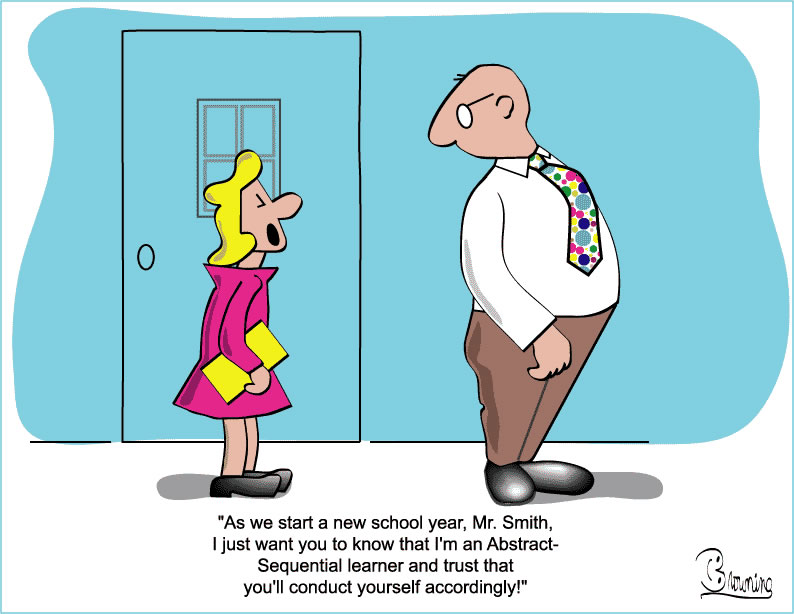
As a golf coach, it is my job to assess your golf game and, in conjunction with you, suggest changes that will help improve your skills. The challenge is to communicate this is a manner that you, the student, can understand and apply when you play golf. I feel that communication skills, understanding a students learning style and the like are skills that are undervalued in a golf coach. I have always thought that a good coach is a coach who can explain the golf swing in a simple and easy to understand manner while a great coach is a coach who can explain the golf swing in a simple and easy to understand manner, ten different ways. By having ten different ways of teaching the same thing you have a better chance of being understood by your student. As a coach, I have had lessons where the student just doesn't seem to be able to apply what I am telling them. This is where having another way to explain the correction/change is invaluable to both me as the coach and my student.

Obviously, as humans, we are all different. One person likes chocolate ice cream while another only likes strawberry. As learners we are also all different. Some players may like to see their swing on video, another player may like to hit lots of balls with feedback from the coach so they can feel a change while another player may like to hear their coach explain the change verbally so they can understand what needs to be done. One player may like to have a sense of the whole swing while another may like to break it down into smaller segments. The challenge as a coach is to determine which method to use with each individual student.

There are a few different tools around that you can use to determine a players (or your own) preferred method of learning. One that I use a lot is the LSA-Golf which is produced by a company called the Creative Learning Company. You can find an example of this profile on my website and it offers a detailed evaluation of a persons preferences as well as a number of suggestions for best dealing with your preferences.

A great book that I use to give me a basic understanding of a student is called The Dominance Factor written by Dr Carla Hannaford. This book suggests that our brain, ear, eye, hand and foot dominance's can influence how we process information. For example, a person who is right brain and right eye dominant may have trouble processing visual information in stressful situations (golf lesson?) due to the fact that their dominant eye is controlled by the less dominant side of their brain (right side of your brain controls the left side of your body and vice versa). Another example is a left brain dominant and left ear dominant person may struggle to process auditory instructions in stressful situations. The book sets out a series of profiles and lists "helps" that may assist a student understand presented information better.

There are also some general traits you can identify in students or yourself to help determine their or your preferences. Visual learners tend to be good at spelling, bad at names, like colours, need time to think things over and need quiet study time. Auditory learners tend to read out loud to themselves, like to speak in class, slower reader, good at languages, like music, has trouble staying quiet and like to work in groups. Kinesthetic learners tend to be good at sport, have trouble staying still, messy writers, needs breaks when studying and is fidgety.

Right and left brain dominant people also show different characteristics. Right brain dominant people tend to be more intuitive and simultaneous in how they process information. They are generally free with their feelings, respond well to demonstrated instructions, they are fluid and spontaneous respond well to open ended questions. Left brain dominant people are much more rational and sequential in processing information. They prefer verbal instruction that is planned and structured. They generally prefer talking and writing and tend to control their feelings more so than a right brain dominant person. They also tend to focus on differences rather than similarities in things so you should be careful when comparing them to a better player on video.

Obviously I could go into a lot of detail regarding learning styles and how information should be presented to suit the different styles but the point of this blog post is to open your eyes to the fact that everyone is different and you should be aware of these differences. If you are a coach, make sure you have a number of strategies to explain each of your key fundamentals and if you are a student, make sure you tell your coach if you don't understand what they are teaching you so they have a chance to repackage it to suit your learning style better.

Until Next Time,

Brent

Thursday, April 21, 2011

Good Golf Habits

The Australian Amateur Championships were held recently on the sandbelt in Melbourne. The men's and women's event was held at the same time and the competitors played on some great courses. The women's event was played at Huntingdale Golf Club and Victoria Golf Club while the men played their event on Woodlands Golf Club and Victoria Golf Club. Great golf courses that were in great condition for the Australian Championships.

The best part of the event being held in Melbourne was the fact that I could get out on the course and have a look at the players and see how they played. Six of my students (4 boys & 2 girls) from Taiwan travelled to Melbourne to play in the event and it was great to catch up with them and see how they are progressing. I spent some time watching them prepare and play the event and I tried to help them out with some of the quirks that you find on the sandbelt in Melbourne. They played good in the stroke play section, especially the girls, but struggled in the matchplay and were all knocked out by the end of the first round.

As I watched the Taiwan players compete it struck me that a lot of the preparation, practice and competition strategies I worked on with them while I was coaching them were not as evident as they could have been. It seemed to me like they had fallen back into old habits very easily. This got me thinking about what I think are common bad golf habits that people tend to have and that I see on an everyday basis on the coaching tee. I have listed below what I think are the most common problems and I have also suggested some simple strategies to help overcome these problems. Let me know your thoughts in the comments section if you have any others.

1. Rake and Hit: This is probably the most common thing I see when players are practicing. The golfer races from work/school to the driving range, buys some golf balls and then proceeds to see how fast they can finish the bucket of balls! An old quote about this type of training is that it is exercise rather than practice! Golfers who do this type of practice tend to be reaching for another ball before the last one has landed (especially if it was a bad shot) and they also seem to be constantly berating themselves. An easy way to correct this problem is to have two, quality, practice swings between each ball. Use these practice swings to complete any drills your coach has given you and really focus on making a quality practice swing. You won't hit as many balls during your practice session but the balls you do hit will be good quality practice which will help you improve your golf.

2. Too Much Block Practice: Another training problem that I see, and it is related to the first problem, is too much block practice. I discussed block practice in a previous post and you can refresh your memory here. When I see golfers hitting 30, 4o or even 50 golf balls with the same club I know that their practice time is being wasted. Block practice is an important part of developing quality swing mechanics but most golfers spend too much time doing this type of practice. I don't care how bad your swing may be, by the time you have hit 50 balls with the same club you are going to be getting some decent results. These results are not a true reflection of where your golf game is at as, on the course, you only get one chance to hit the shot. You need to mix block practice with drill work and random practice as this will make it easier for you to perform well on the course.

3. Only Practice Favourite Clubs/Shots: The third training fault I see a lot of is players only practicing their favourite shots or shots that they are already good at. Practicing your strengths is a nice way to build a false sense of confidence, however, if you are serious about improving your game you need to target your practice towards the weak areas of your game. Use your statistics to identify the weakest areas of your golf game and structure your practice time to spend enough time on these specific areas. If you hit 80% of fairways but only get up and down out of a bunker 15% of the time you need to be in the practice bunker, not on the range smashing driver!

4. No Target on the Range: A lot of golfers will get on the range and hit a bucket of balls with no clearly defined target to aim for. They will walk away from the session without any idea if there shots where going in the right direction or not. Whenever you are practicing you need to have a clearly defined target that identifies both accuracy and distance. This is important as your shots not only need to be straight, they also need to be hit the correct distance.

5. No Plan on the Course: This bad habit is an on course problem rather than a driving range problem. The amount of players I play with that can't tell me what their plan is to attack a golf hole astounds me! Most players play most of their golf on the same few courses so there is no excuse not to have a plan for each hole on those courses. You need to identify what holes you can attack and which holes you should play safe. You should have a clearly defined target for each tee shot and you should know which pin positions you can attack and which ones you can't. It doesn't take long to design a simple plan for each hole you play and it will be time well spent. All you need to do is write down the holes strengths and weaknesses and identify how they stack up against your own strengths and weaknesses as a golfer. If your strengths match up against the holes weakness you can attack and vice versa if your weaknesses match the holes strengths. Your course plan is also a great anchor to use to refocus yourself after a bad shot or hole. As soon as you hit a bad shot you can focus hard on your plan which will help you forget about the loose shot and get back on track.

These are a few of the common bad golf habits I see on the range and course and the strategies I have outlined are a good start to getting rid of these habits. If you have any others you can think of, or you want to discuss anything with me, feel free to post a comment or email me via the link in my profile.

Until Next Time,

Brent

Thursday, March 31, 2011

Players I Coach

I was speaking recently with a fellow golf coach and he was talking about the perception golfers have of you as a coach. He is an extremely talented coach who has worked in high performance programs in Australia for a number of years and has an amazing amount of success with his students. He was relating a story about a friend of his, a club golfer, who was talking to him about her game and the trouble she was having. She then asked him if he knew a golf coach he could recommend to help her with her game. When he suggested himself as a potential coach (as you would!) she was surprised that he would coach a golfer such as herself. She had a perception of him as a coach that would only coach low handicap players. Personally, I found a little of that perception when I was overseas. Some of the younger players in Taiwan were scared to approach me and ask for advice as they saw me as the National Coach and not a coach that would help younger players.


As a golf coach, I look at a lot more than the player's handicap before deciding if they are a good student or not. The ideal student for me to work with and coach is someone who is prepared to put in some work and practice time, be open to new ideas and not afraid to try new things. This is the kind of player, regardless of handicap or ability, who I can work with and get results.


When I say I want a player to put in some work and practice time I understand that each person has a different amount of practice time available to them and not all players can spend five hours a day hitting practice balls. What I need from a student is a commitment to use what practice time they have effectively and efficiently. The use of a player's practice time links to two previous blog posts of mine about evaluating your game and effective practice.


As a coach, I love to work with a student who is keen to make changes and improve their game. This kind of golfer is not looking for a "quick fix" and is seeking long term improvement. We can use the evaluations in my earlier blog post to determine their starting point and can then design a program that allows them to get to their destination of improved golf. Along the way we use their statistics records and other monitoring tools to target their practice and keep them on track for success.


A perfect situation for me as a coach would be a lesson book full of students who wanted to have fun, work hard and get the most out of their golf game. I would be challenged as a coach to keep them improving and the players would get the reward of better golf for their hard work. If you are a golfer and that sounds like you, please feel free to get in touch with me and we can have some fun together improving your golf game!


Until next time,


Brent